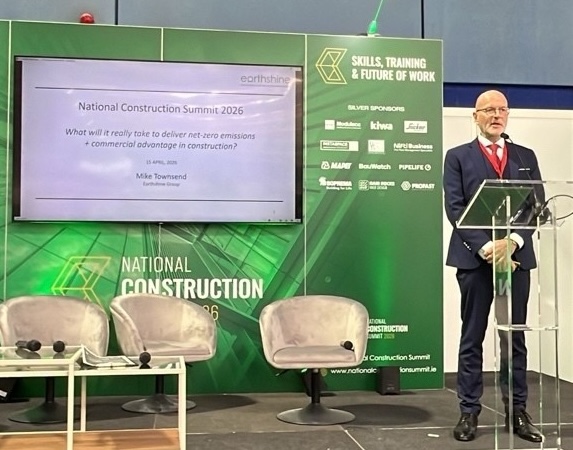
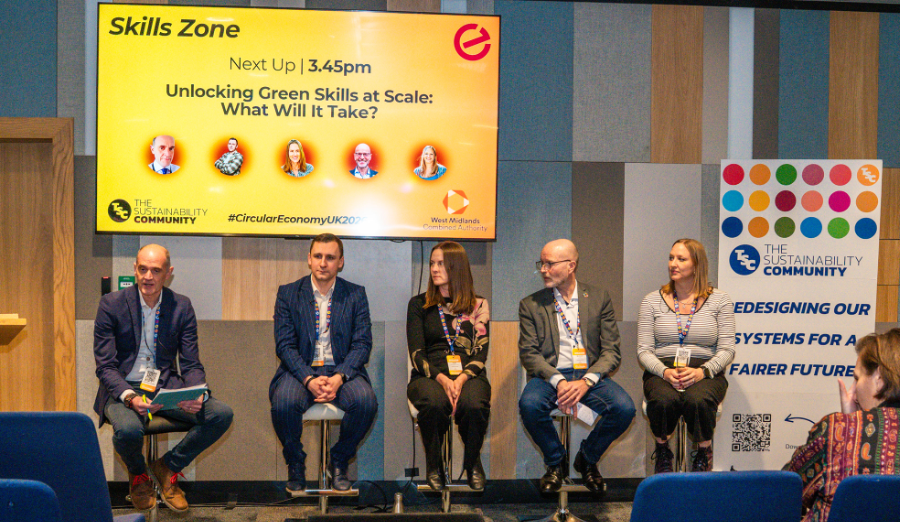
We really enjoyed joining the conversation on Unlocking Green Skills at “Circular Economy UK 26″ in Birmingham, last Thursday (05 Feb 2026):
- We need a robust (future-oriented) strategy to manage skills demand and supply;
- Circularity and sustainability skills to be integrated in all curricula;
- Mindset is everything – nurture the art of seeing new possibilities;
- Call to action: much work to be done, much investment, but a big prize – let’s go!
A stimulating and lively discussion with Richard Clewley (chair) and panellists Jordan Turner, Jane Hall, Mike Townsend, and Danielle Heward.
Here’s a summary of some of the key points shared (from Earthshine perspective):
1. Skills for the circular economy cuts across all sectors – how do we provide a focus for skills training?
- Big challenge – we need a robust strategy and framework to manage circular skills across all sectors.
- Needs to be future oriented – not based on business-as-usual – future-ready for circular skills in all value chains.
- Also grounded in new economic vision – as we now see in the West Midlands – for sustainable and inclusive economic growth: skills for circular manufacturing, circular construction, circular food systems, and more.
- Mindful of new types of enterprise and emerging value chain infrastructure – reconfigured for product take-back, refurbishment and remanufacturing.
- Need visibility of skills demand vs current provision – develop partnerships to close the gaps.
- Major investment in people and skills required, right through the value chain.
- Key example, Copenhagen City Council, new Climate Action Strategy – major focus on reducing ‘consumption emissions’, tackling the “demand” side of the equation, rather than the conventional carbon accounting focus on Scope 3. And, big emphasis on upgrading green skills – whole workforce making green transition is an important prerequisite for delivering climate action initiatives.
2. How can the curriculum keep pace with change – and provide the skills for our residents to get good jobs in the circular economy? How do we close the gap between emerging skills demand and. current skills supply?
- We need circular economy + sustainability principles fully integrated into all aspects of all curricula (not bolted on) – involves “re-imagining” how jobs and skills will need to be in a circular economy.
- Context is key: Skills need to be aligned with a vision for circular and sustainable economy (as in WM Region).
- Looking beyond business-as-usual – new curricula built on new theories for business, economy, and society.
- Need for serious visibility, analysis, and planning to close skills gaps at all levels: Management skills; Worker/operative; and, transversal skills, like “mindset” – to enable us to see new possibilities.
- Key example: Sustainable Business Strategy course – integrating sustainability and circular economy changes everything.
- Business moves from: the narrow pursuit of short-term growth and profit, towards a new integrated model for sustainable business success.
- We redefine purpose; optimising responsible growth within planetary and societal boundaries; developing highly relevant and regenerative circular business models, adding real value to people, society and planet; and so on.
- Marketing shifts from driving massive over-consumption to selling more circular and sustainable (low-consumption) living.
- Business innovation: How to make more money through low-consumption, generating skilled jobs at all stages of the value chain.
- With a completely different emphasis, we re-purpose skills in all disciplines for sustainable outcomes.
3. The circular economy mindset feels like an important foundation. Could mindset complement the typical cast of transversal skills, such as collaboration, creativity, communication and problem solving?
- Going “circular” is not just about developing hard skills, we also need a shift in ‘mindset’.
- As John Maynard Keynes described, “The difficulty lies not so much in developing new ideas as in escaping from old ones.”
- Embracing an “integrated mindset” is a pre-requisite; opening the door to see new possibilities in circular solutions + commercial innovation.
- For example, no longer seeing used materials as waste, but as a viable economic resource: Just imagine looking into a great big warehouse, stacked to the roof with old washing machines – do we see a heap of old junk to be disposed of? Or do we see a mountain of valuable resources to be harvested and exploited?
- Key part of the mindset shift is all about nurturing “Both+And” thinking, where we are able to see past false binary choices – such as whether we might focus on sustainability or on the economy – and, instead, we find a new ‘sweet spot’, developing sustainable solutions that also work commercially.
- Major difference in people being open and creative to see and shape new solutions, following initial mindset work.
- Key example: The Sustainability Transformation Accelerator program — a powerful collaboration with Copenhagen Business School — designed to equip business leaders in moving beyond incremental change and unlocking impactful breakthrough strategies that drive sustainable business transformation and commercial advantage (follow link for more details).
- With the right mindset, everything is possible!
4. Call to action – what will it take to unlock green skills at scale?
- Develop a Robust Strategy, based on compelling vision, underpinned by circular value chains.
- Collaborative design + Implementation of solutions: Developed with the whole value chain, new business models – making it work commercially.
- Develop a really robust (multi-level) change plan, overcoming barriers and supporting the enablers: Working with key stakeholder groups – to maximise the opportunity and overcome barriers, including: Residents/customers, business and value chains, government and policy-makers, and finance and investment – all working in concert!
- CAPTURE THE BIG PRIZE: Economic regeneration for 21C: circular economy and sustainability as catalyst for new economy jobs, livelihoods and shared prosperity – imagine a further 174,000 skilled circular jobs and livelihoods in the West Midlands by 2030?!
- All essential and achievable for net-zero and economic regeneration – lots of work to be done – let’s get to it!
BIG THANKS to Kate Hutchinson, Liv Dawson, Steph Varley, Declan Williams, Lily Smith, and all the team at The Sustainability Community — and to our very own Chris Gale — thanks for all your support!
And, much thanks and gratitude to all panel speakers — great to work with you all!
* This summary article has been developed and written without the use of AI — never outsource a core competence — use it or lose it! *
#CircularEconomy #Remanufacturing #WestMidlands #Regeneration #Sustainability #GreenSkills #NetZero #Birmingham #TheSustainabilityCommunity